
Full-text search in SQL
Use @@ on lakehouse tables to search logs, tickets, and documents. Semantic search with <=> is available in beta. Filter, join, and aggregate in the same query.
Search without a sidecar index
Full-text retrieval lives in SQL, ranked with score and composable with filters and joins. Semantic search is in beta for meaning-based lookup on the same tables.


@@ full-text
Search all text fields or one column in SQL.

Typo-tolerant matching
Fuzzy matching for messy operational text.

<=> semantic search Beta
Retrieve by meaning when keywords are not enough.

Filters and joins
Combine search with time ranges, tenants, and joins.
score ranking
Order results by relevance in SQL.

Search-first agents
Find candidate records before writing precise SQL.
What you get
Search as a query primitive, not another platform to operate.

Search before schema
Start with "GDPR issues" or "payment timeouts," then narrow with SQL.

One runtime
Search, filter, join, and aggregate on the same tables.

Agent discovery
Agents search first, then write SQL once they know which table to use.

Fewer pipelines
Skip Elasticsearch and vector sync jobs when lakehouse search is enough.
In SQL
Full-text with filters:
SELECT ticket_id, subject, description
FROM support.main.tickets
WHERE workspace_id = 'acme_eu'
 AND * @@ 'data residency'
ORDER BY score DESC;
Semantic by meaning:
BetaSELECT *
FROM support.main.tickets
WHERE * <=> 'customers worried about GDPR and EU deployment'
ORDER BY score DESC;Frequently asked questions
Full-text or semantic?
@@ for full-text keywords on lakehouse tables. <=> semantic search Beta is in beta for meaning-based retrieval on the same tables.
Does this replace Elasticsearch?
Not for every use case. Best for operational and analytical search on lakehouse data alongside SQL.
Combine with SQL filters?
Yes. Search predicates compose with WHERE, joins, and score ordering.
Why does this help agents?
Agents often lack schema context upfront. Search finds candidates. SQL refines from there.
Explore the rest of the platform
More workloads on the same engine, governance, and pricing.
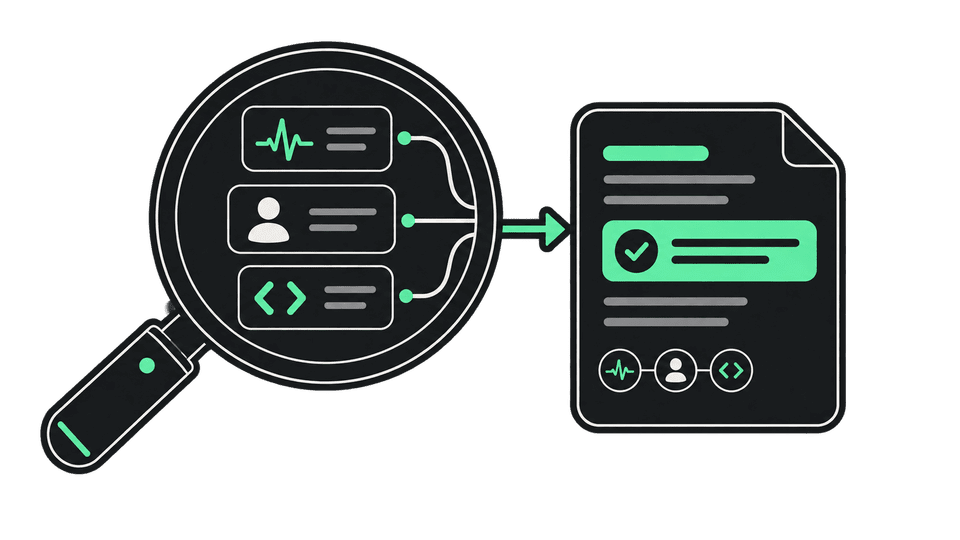
Cousteau

Investigate product changes across events, logs, customer data, and code. Cousteau brings back what changed, why, and who is affected.

Self-serve BI
Give every team live dashboards, shared metrics, and agent-assisted exploration on the same governed data foundation.

Add search to your lakehouse
DuckDB workers on open formats, federated SQL across your existing systems,
and an MCP server for agents — at flat monthly pricing.