Product analytics
Understand how people use your product, how that behavior turns into revenue, and what changed before the business notices — all from the same governed lakehouse.

How teams adopt product analytics
Capture trustworthy events, connect behavior to business outcomes, then operate dashboards and agents from the same source of truth.
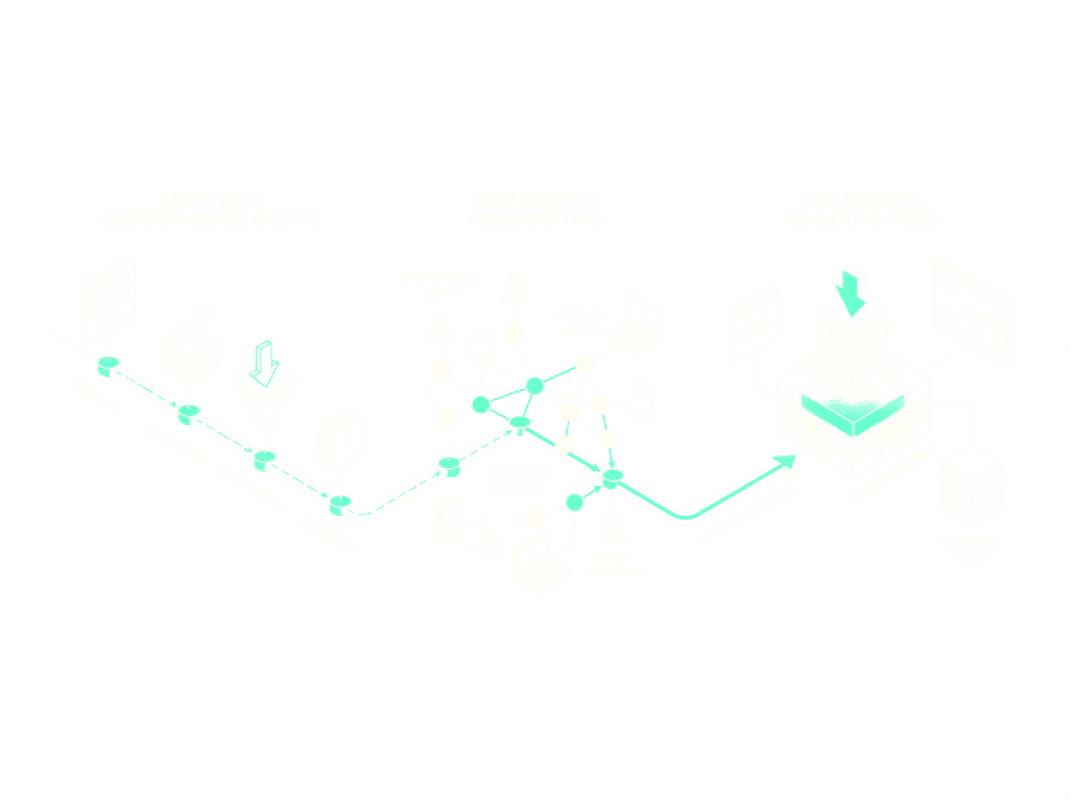
Capture events you can trust
Product analytics only works when the event stream is clean enough to trust. Altertable captures product behavior directly into the lakehouse, where it can be queried next to the rest of the business.
- Start with decision-grade events
Track the moments that actually explain growth: sign-up, activation, conversion, retention, and the product actions that move them.
- Keep identity from drifting
Tie anonymous and known behavior together early so cohorts, journeys, and revenue views follow the same customer across devices and sessions.
- Use the data while it is fresh
Events become available for SQL, dashboards, and follow-up analysis quickly, without waiting on a separate analytics warehouse to catch up.
What product and growth teams get
Clean instrumentation, live joins with the business, fast exploration, and governed metrics that work for humans and agents.
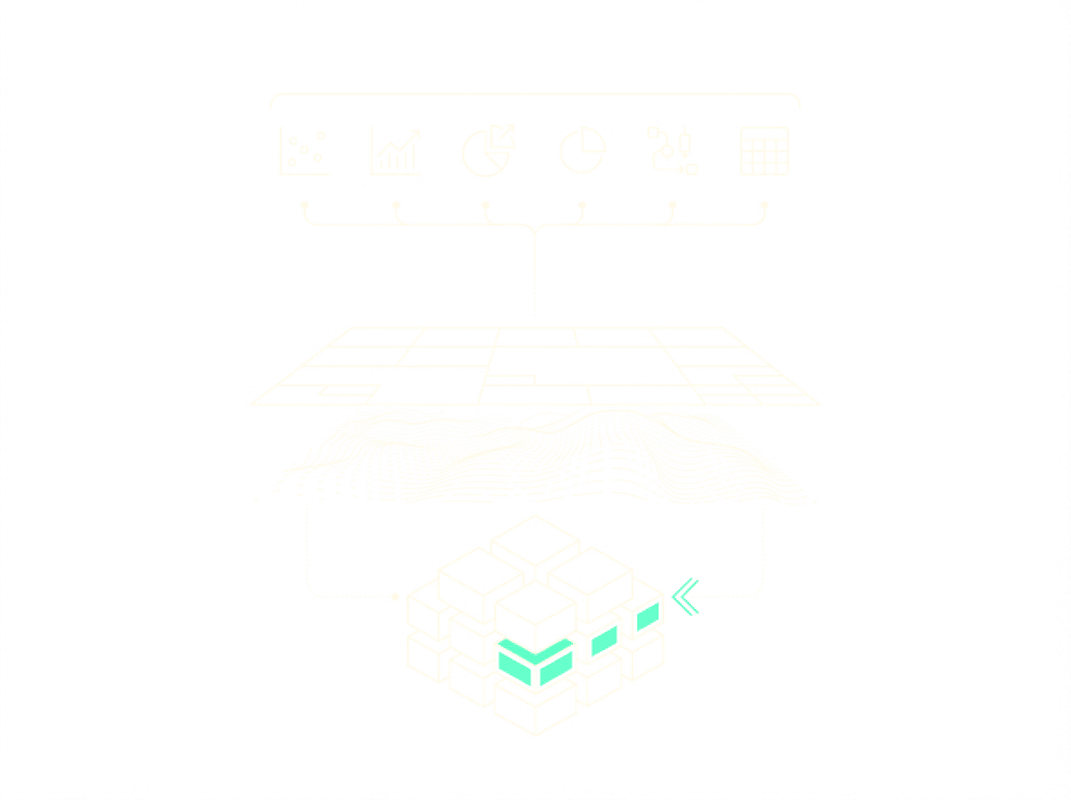
One truth for product and revenue
Behavior, billing, margin, and support can be analyzed together in the same lakehouse, without reverse-ETL stitching or duplicate metric logic.
Instrumentation you can trust
SDKs in major languages and stable identity keep events useful as the product evolves, instead of creating a stream of free-form properties teams have to clean later.
Exploration stays fast
Cohort, funnel, and retention analysis should invite the next question, not punish it. Keep drill-downs responsive even as event volume grows.
Controls every surface inherits
Set permissions, residency, and auditability once at the lakehouse layer, then let SQL, dashboards, APIs, and agents inherit the same guardrails.
Core product analytics capabilities
Clean event capture, identity-aware analysis, business joins, and shared definitions in the same operational lakehouse.
Events live with the business
Product events land in the same lakehouse as revenue, support, and operational data, so activation, retention, and conversion can be analyzed against the rest of the company.

Clean events from day one
SDKs in the major languages your team already uses make clean event capture easy. Anonymous and known behavior can still be tied together as users move across sessions and devices.
Behavior meets revenue
Answer questions like which features drive LTV, margin, or expansion without stitching product analytics to finance data after the fact.
Same metrics for every surface
Funnels, segments, dashboards, SQL, and agents can all read from the same definitions, so teams stop reconciling why every tool counts the product differently.
Your language, your stack
SDKs and adapters in the languages your team already uses,
so you ship without changing how you work.
Explore more use cases
Other workloads that share the same engine and governance.

Analytical Database
Store data in Altertable or connect the systems you already have, then query everything through one fast SQL engine across product, business, and operational data.
Self-Serve BI
Build dashboards and visualizations on the same live engine used for SQL, then expose trusted metrics and insights to AI agents and collaboration tools through MCP.
Agentic Workflows
Give Claude, GPT, and any MCP client secure, governed access to query data, use tools, and work from the same live context as your team.

Understand product behavior in the context of the business
DuckDB workers on open formats, federated SQL across your existing systems,
and an MCP server for agents — at flat monthly pricing.
OR SUBSCRIBE TO OUR NEWSLETTER FOR UPDATES
For more information, please consult our Privacy Policy